East Anglia
¤
Institute
¤
Of
¤
Historic
¤
Building
¤
Conservation
Editorial
Well...Britain has been hit by the big freeze but does the
same fate await PPS 15!?!
Planning minister John Healy has pledged to redraft the
government’s controversial planning policy statement 15
to take account of criticism from conservation and planning
groups.
Mr Healy confirmed the redraft and tried to quell growing
fears surrounding the PPS by stating. ‘The current language
in the planning policy statement is not clear enough. We will
redraft it to make clear that the protection of heritage
Buildings will not be reduced’.
26
Winter 2009/10
Inside
‘To put it beyond doubt, there is no question of downgrading
the protection of historic buildings’.
Editorial
Conservation Pro?
Unusual Listed Building
AGM 2009
Plus more...
It was made clear that there will be no further consultation
before the final Statement is published (around!) Easter 2010,
although Communities and Local Government (CGL) made a
commitment to study all 500 responses received.
Thank you to
Traditional Building Skills
,
Essex County Council
for sponsorship, see insert, course programme for
April 2010-March 2011










Conservation Professional?
As a joint initiative the IHBC and SPAB are producing a series of PowerPoint presentations to improve
the understanding and philosophy of good conservation practise. The finished presentation material
will require speakers from various locations around the region to deliver the programme at village halls,
education establishments and places of work etc. It is hoped that a ‘Speaker pool’ can be formed so
that speakers could be asked to contribute in their locality. There will be a pilot period where the work
will be voluntary, but will cover expenses. We would also like to here from any groups who would like
to book for the programme; it is expected to be available in the coming months.
If you are passionate about conserving the various aspects of our built heritage, and would like to
know more, then please contact Joe Orsi who is coordinating the programme at
j.orsi@btinternet.com or call on 01760 337994.


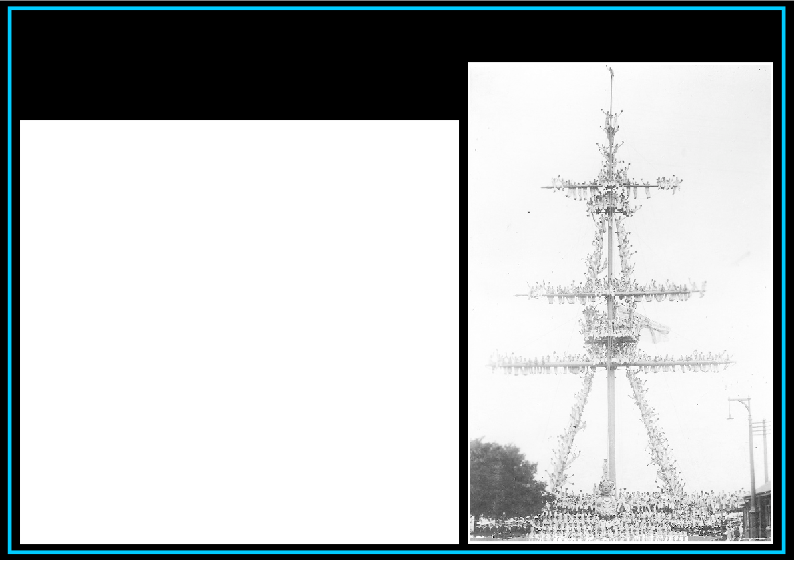
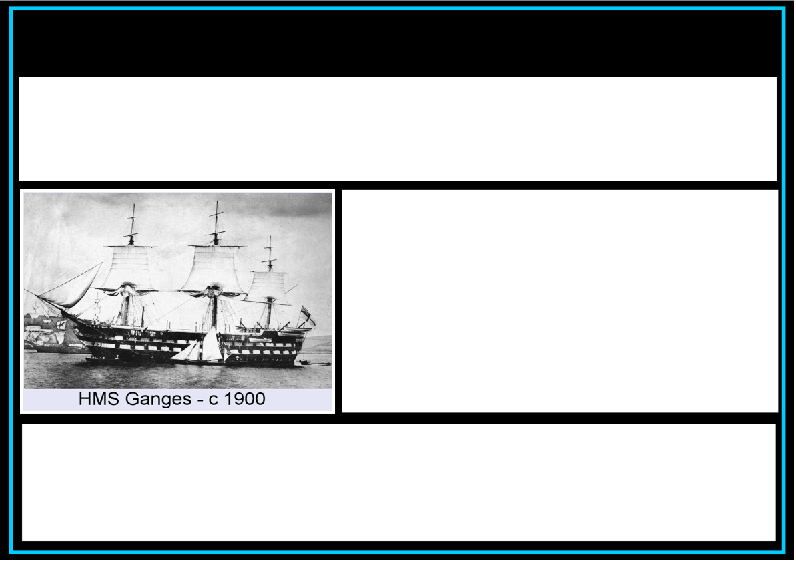
Unusual Listed Building No.9:
HMS Ganges Sailing Rig
Below:
Photograph of
HMS Ganges Sailing Rig
If you are a conservationist with a fear of heights then I would suggest
staying well clear of this listed structure (!) erected on shore in 1907 at
HMS Ganges, a former Royal navy training school in Shotley on the
Orwell near Ipswich, the sailing rig must surely be one of the most
unusual listed structures in East Anglia, if not the whole of the country.
HMS Ganges was closed in 1976 and currently awaits redevelopment.
The mast was listed Grade II on 23/2/1989
The purpose of the mast was to train sailors in the traditional practice of
rigging for ceremonial purposes. The lower foremast (steel) originally
came from HMS Cordelia (1881) with other sections from the mizzen
mast of HMS Agincourt (1865). At the foot of the mast was an Indian
prince figurehead which came from the original HMS Ganges, built and
launched in Bombay in 1821. The Ganges was the last sailing ship to
be a sea going flag ship before becoming a training ship in Falmouth
Harbour in 1866. After being moored in as a training ship in Harwich
Harbour since 1899, the name was passed to the new land based
training centre at Shotley in 1905.
As well as being climbed by several thousand trainee sailors, the mast
was also climbed by a well known celebrity in 1968. John Noakes, the
adventurous Blue Peter presenter, shimmied almost to the very top of
the mast, a daring feat as the mast reaches 143 feet 10 inches! With
today's health and safety regulations it is likely that the rig would have to
be taken down and dismantled in order to be repaired….which may
come as some relief to any conservation officer asked to carry out a site
inspection to oversee repairs!
Unusual Listed Building No. 9 Cont...
The original figurehead of the 1821 HMS Ganges, an Indian prince, was originally placed at the bottom of
the rigging, but was removed after some nasty accidents involving falling sailors. Since the closure of the
base in 1976 the figurehead was located in the grounds of the Royal Hospital School at Holbrook, also in
district of Babergh. The figurehead was recently removed and is undergoing repair before returned home
to the HMS Ganges museum at Shotley marina.
The site has planning permission for 400 retirement village
homes….although there has been a lot of local anger over
the proposed scheme (do an internet search if you would
like to know more!) The mast was restored in 1988 by
Potten Ltd and repaired in 2000, but is again in a poor state
of repair. Apparently, according to a local newsletter, it is the
late C20th timber repairs that now need repairing, the
original timber of the mast being in fine condition (!) It is
hoped by a local residents group that the mast can be
repaired in situ and that it will not be repaired subject to the
redevelopment of site, which I believe is currently stalled.
Unusual Listed Building Article as always supplied by
Chris Bennett
.
ED - I would like to take this opportunity to thank Chris for his efforts with the newsletter over the past
three years and congratulate him on the excellent job he has done. I now realise how much effort goes
into it’s production!
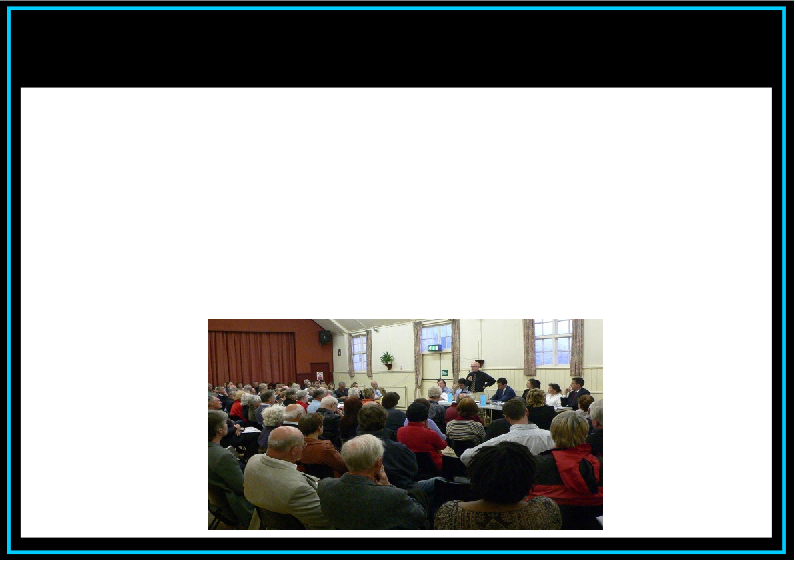
AGM 2009:
Challenges in Conservation
By
Mike McConnell
l
Not only does the conservation officer need to deal
with conflicts that arise within the competing parties
involved in a conservation project but also the
conflict in their own role as they seek to balance the
protection of the character of a building or
neighbourhood with the promotion of architectural
innovation
.
The event was about bringing together people with
different perceptions of Conservation and to encourage
debate and the exchange of views. Four speakers were
on the agenda;
Chris Bennett
, a design and
Conservation Officer from Norwich,
Douglas Kent
from
the Society for Protection of Ancient Buildings (SPAB),
Nigel Sunter
a Conservation Architect and
Roland Bee
an owner of a C15th Suffolk timber frame house.
The next speaker
Douglas Kent
described SPAB’s
raison d’etre as advising, educating and campaigning,
to promote best practice and quality in the care, repair
and alteration of historic buildings. He summed up
SPAB’s philosophy as authenticity and integrity. For
SPAB the primary consideration is the retention of
historic fabric. Planning the future use of a building
around the existing historic fabric and form. Requiring
owners and users to minimise intervention to a building
by adapting their needs to the building. This approach
is in contrast to other parts of the world and cultures
where ‘historic buildings’ are reconstructed at regular
intervals. An approach that SPAB feared the draft
version of the new PPG 15 was endorsing by
diminishing the importance of historic fabric in favour
of the economic opportunities a building might offer.
Douglas used a case study to illustrate the SPAB way
of working, using and living in a historic building. Do
things slowly, plan, learn to live or work with a building
before even thinking of change. Carry out a thorough
survey and research. Guard against over development,
be environmentally friendly and budget realistically.
Chris Bennett
spoke first of the role of the conservation
officer. Chris suggested that the conservation officer
needed to have a holistic approach to conservation.
The conservation officer was frequently called upon to
accommodate the needs and ideas of all those involved
in a project. A bringing together of owners, architects,
builders, building inspectors, to work together as a team
even where those needs and ideas were in conflict.
Set alongside this enabling role was also the role of
guardian of the architectural features and form of
a building. A role that required varying levels of analysis
and monitoring of the building and carried with it the
ultimate sanction of saying ‘no’.
To fulfil this varied role
the conservation officer needs an interdisciplinary set of
skills.

AGM 2009:
Challenges in Conservation
By
Having completed the background Nigel highlighted a
number of case studies, most of which he had been
involved with, dealing with redundant buildings with the
brief of adapting them to new uses. The illustrations we
saw often involved considerable alteration and partial
demolition to accommodate the scheduled new use.
Alterations were often radical, such as completely
removing a floor, demolishing entire buildings
that formed part of a larger complex and introducing
imposing new extensions. The rational for this level of
intervention was to accommodate a preferred change
of use. Whether or not it was the only change of use
on the table was not spelt out but it was implied. One
particular example from Great Yarmouth raised the
question 'How do find another use for a building full of
brine tanks and smoke houses'
Mike McConnell
l
Nigel Sunter
followed Douglas. His approach to any
project was to draw up Conservation Plans. Before
running through several case studies he outlined a brief
historical background to Conservation Plans.
Nigel suggested the starting point for Conservation
Plans was the Burra Charter adopted by the Australian
National Committee of ICOMOS in 1979. The Burra
Charter provided the guidance for the conservation
and
management of places of cultural significance.
In
response to the Burra Charter, James Kerr developed
Conservation Plans for the government of New
South Wales.
The plan was based on the understanding
of the history and fabric of the site leading to an
appreciation of its significance. The core message was
that in dealing with historic buildings it was not simply an
exercise in the retention of all the fabric of the building,
but understanding how a building has evolved, and what
elements of the building it is important to preserve,
especially if those elements make a significant
contribution to why the building is considered to have
special character. English Heritage adopted the Kerr
model adding the additional consideration of
vulnerability and developing the concept of a
conservation management plan.
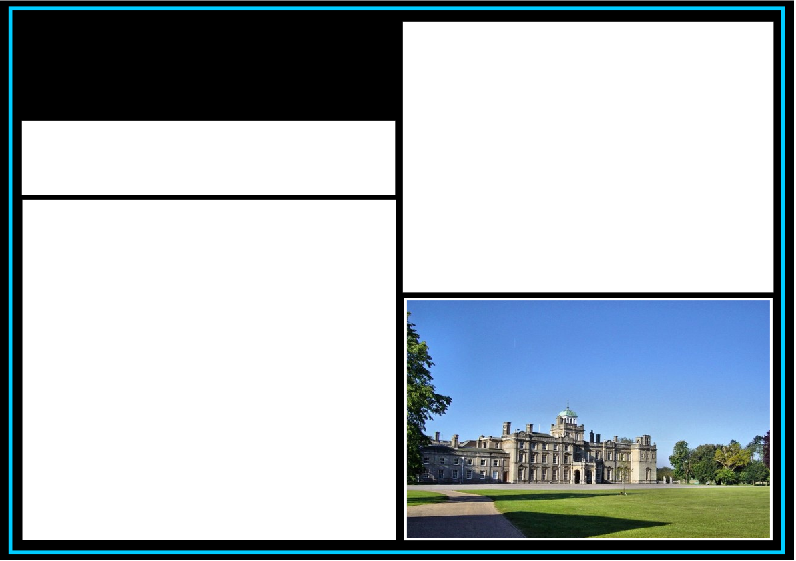
The AGM was held at Culford School pictured.
AGM 2009:
Challenges in Conservation
By
Over time and with some perseverance Roland found
the architects and builders and conservation officers
who were supportive, helpful and enthusiastic and he
was not slow about saying who they were. He forbore
to tell us the names of the others! He decided that he
would need to assume the role of 'clerk of the works'
himself if he was to achieve the maximum retention of
historic fabric, good practice conservation work, and
stay in control of the budget.
Mike McConnell
l
I don't think our last speaker
Roland Bee
would object
if I said he came to the talk as an owner who considered
he had done an excellent job, a view shared by many
including myself, of renovating his C15th farmhouse
despite some of the early advice he received from
'experts'. Roland and Francis Bee came
to the project
with some knowledge
of historic buildings
and a
conservation philosophy that owed much to the SPAB
tradition. They also had a budget, which they intended
to stick to.
Roland's experience with the architects, engineers,
builders, conservation and planning officers was, to say
the least, mixed. He was very critical of those
professionals who were not adverse to bullying their
clients to have their views and ideas adopted, and
builders who despite promoting themselves as
'specialist conservation builders' would, left unchecked,
consign significant parts of the building to the skip,
displaying very little regard for significance or traditional
repairs. He soon discovered that whatever the
reputation of a firm its work was only as good as the
men or women on site. Clearly his experience was that
SPAB and ICOMOS guidelines had not percolated down
to all the conservation professionals and builders in
Suffolk.
No surprise there
.
Our four speakers approached historic building
conservation from different professional angles
which led to different pressures and constraints.
Although different approaches created plenty of
opportunities for conflict, there was also a lot of
common ground. An obvious clash can occur between
the SPAB philosophy and the economics of a project.
Mix in some incompetence, greed, indifference,
building regulations, pedantic planners and a complete
lack of consideration of anybody else's point of view
and it's a wonder it all works as well as it does.
Perhaps the reason that it does it that there are
people out there who keep in mind conservation ethics
and philosophy, maintain an open dialogue and are
prepared to listen to others, and are willing to be
flexible in their approach.
The message of the day was that it was important
to keep an open minded approach to building
conservation and that at the end of the day we are
all here to preserve the building not our own egos!

Newsletter Editor:
As its my first newsletter I thought I should take some time to introduce myself.
I’m Paul Rhymes, Conservation and Design Officer at North Norfolk District Council,
recently graduated in Architectural Conservation BA(Hons) from Derby University. My other
Conservation related jobs include short spells at Oxford Preservation Trust and Lambeth Borough
Council. I have been a member of the IHBC for three years, since I was 19. I have yet to achieve full
membership status but hopefully that will come this year. Finally, if you have any ideas for future articles or
discussion topics you think I should include, please feel free to contact me.
Chair
Vice Chair
Branch Rep &
Membership Sec
Treasurer
Secretary
Events
Education
Chris Bennett chrisbennett@norwich.gov.uk
D
Franziska Callaghan franziska@wckdesign.co.uk
avid Andrews dave .andrews@essexcc.gov.uk
Amanda
Rix amanda.rix@norfolk.gov.uk
P
David Edleston dedleston@s-norfolk.gov.uk
Joe Orsi
j.orsi@btinternet.com
rue Smith
pruesmith@btinternet.com
Committee Members:
David Andrews; Franziska Callaghan; Chris Davis; Phil Godwin;
Mike McConnell; Joe Orsi; Henry Painter
Edited by Paul Rhymes, T: 01263 516367
Conservation, Design and Landscape, North Norfolk District Council, Holt Road, Cromer, Norfolk, NR27 9EN